How it works
This original five-chapter guide explains dust ii attack and defense guide through the real objectives, maps and decision-making systems of Counter-Strike 2. It distinguishes stable mechanics from dated Premier or balance information.
Practical strategy
Begin with identify the three major pressure zones; then work through plan a deliberate t opening. Put the steps into practice one at a time before queueing ranked.
Mistakes to avoid
Do not copy old CS:GO lineups, assume a fixed matchmaking rotation or change five habits at once. Evaluate whether each step actually solves your round problem.
Dust II attack and defense guide: step-by-step
Identify the three major pressure zones
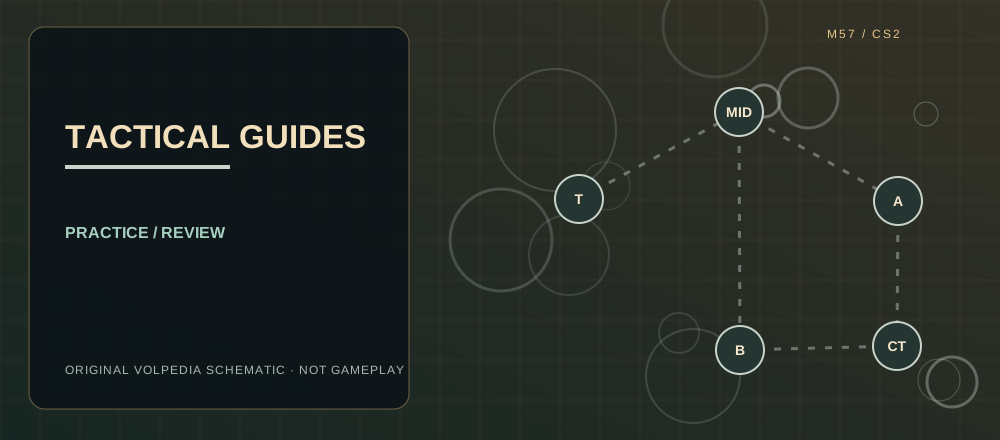
A Long, catwalk/mid and B tunnel approaches form the round’s first pressure. A player holding mid may also influence short and rotations, so sound and sightline control matter.
Plan a deliberate T opening
Contest one lane with trade support while another player reports information. If Long is controlled, test defender responses before committing bomb. On an A split, time catwalk pressure with the other entry rather than arriving at separate moments.
Defend without over-rotating
A CT on B should call the amount of tunnel pressure and buy time; an A player should not abandon site solely because one enemy was seen at mid. Rotate on credible combined information.
Use utility to isolate dangerous sightlines
Smokes can limit a long-range angle and flashes can allow a short-distance entry. Do not assume an old Dust II smoke lineup still works after a patch; verify geometry in practice.
Finish with bomb discipline
Plant where your team can defend the bomb, then assign who covers Long, short and CT routes. CT retakes require clearing close positions before touching the bomb. Time pressure is an objective, not a reason to hunt kills.